


Changing jobs usually does not require a special tax return, but it can affect your withholding, year-end forms, retirement accounts, and estimated tax payments. The main task is to track income from every employer and make sure the new job is withholding an appropriate amount of federal and New Mexico income tax.
What happens to your taxes when you change jobs?
Your wages from both jobs are generally reported on the same annual tax return. If you leave one employer and begin another during the same calendar year, each employer will issue a separate Form W-2 for the wages paid and taxes withheld.
For example, someone who works for one employer from January through April and begins a new job in May may receive two W-2 forms the following January. Both forms must be included on the federal return and the New Mexico personal income tax return.
Changing jobs does not automatically create a new tax bracket by itself. However, the total income from all jobs may increase your annual tax liability. A higher salary, signing bonus, overtime, unused vacation payout, relocation payment, or other compensation can change the amount owed.
Do you need to complete a new Form W-4?
Yes. A new employer generally requires a new federal Form W-4 before payroll begins. This form tells the employer how much federal income tax to withhold from each paycheck.
The withholding decision should account for more than the new hourly wage or annual salary. Review whether you:
- Worked for another employer earlier in the year
- Still have income from a second job
- Are married and filing jointly while both spouses work
- Receive pension, retirement, interest, rental, or contract income
- Expect to claim significant credits or deductions
- Received a bonus or other supplemental payment
A common mistake is completing the new W-4 as though the new job were the only income received during the year. That can result in too little withholding when wages from the earlier job are added.
The IRS withholding estimator can help compare recent pay information from multiple jobs. A new W-4 may also be appropriate after marriage, divorce, the birth or adoption of a child, or a significant change in deductions or credits.
How does New Mexico withholding work?
New Mexico does not use a separate state withholding form equivalent to the federal W-4. Employees generally use the federal W-4 for New Mexico withholding purposes, following the state’s instructions for marking or retaining the form.
Check the first pay statement from the new employer to confirm that New Mexico withholding has started if it should. Payroll errors can occur when an employee moves between employers, changes work locations, or has an unusual first paycheck.
New Mexico withholding is an estimate of state income tax paid during the year. It is credited against the actual liability calculated on the state return. If too little is withheld and no estimated payments are made, an underpayment penalty may apply in some situations.
Residents in the community may also encounter irregular work schedules, seasonal employment, travel-related work, or income from more than one household member. These factors make it especially useful to review pay statements instead of assuming that withholding will adjust automatically.
What should you do with a retirement account from the old job?
A former employer’s retirement plan may offer several choices. Depending on the plan, an individual may be able to:
- Leave the money in the former employer’s plan
- Move it directly to a new employer’s eligible plan
- Transfer it directly to an individual retirement account
- Take the money as a distribution
A direct rollover generally avoids current taxation on the amount transferred. A check paid directly to the employee may be subject to mandatory federal withholding, and the full amount may need to be deposited into another eligible retirement account within the required period to preserve rollover treatment.
Taking retirement funds as cash can create ordinary income tax and, for many taxpayers younger than age 59½, an additional early-distribution tax. The treatment can differ for Roth accounts, traditional accounts, pension plans, and other arrangements.
Before requesting a distribution, review the plan’s written rollover instructions. Keep records of any transfer, including the distribution statement and confirmation that the receiving account accepted the funds.
What happens to unused vacation pay, bonuses, and final wages?
A final paycheck may include regular wages, overtime, unused vacation pay, commissions, severance, or a signing-related payment. These amounts are generally taxable compensation, although the withholding method may differ from an ordinary paycheck.
A bonus may appear to have a higher tax rate because employers often use a supplemental wage withholding method. The amount withheld is not necessarily the final tax owed on that payment. The annual return combines the bonus with other income and calculates tax using the overall situation.
Check the final pay statement carefully. It should show the payment date, gross compensation, federal withholding, New Mexico withholding, Social Security tax, and Medicare tax. Keep the statement in case the year-end W-2 does not match the wages actually received.
What records should you keep after leaving a job?
Create a file for both the former and new employers. Useful records include:
- Final pay statements
- New-hire paperwork and W-4 information
- Benefits and retirement-plan documents
- Reimbursement records
- Severance or bonus letters
- Health savings account information
- Moving or relocation payment records
- Changes to payroll elections
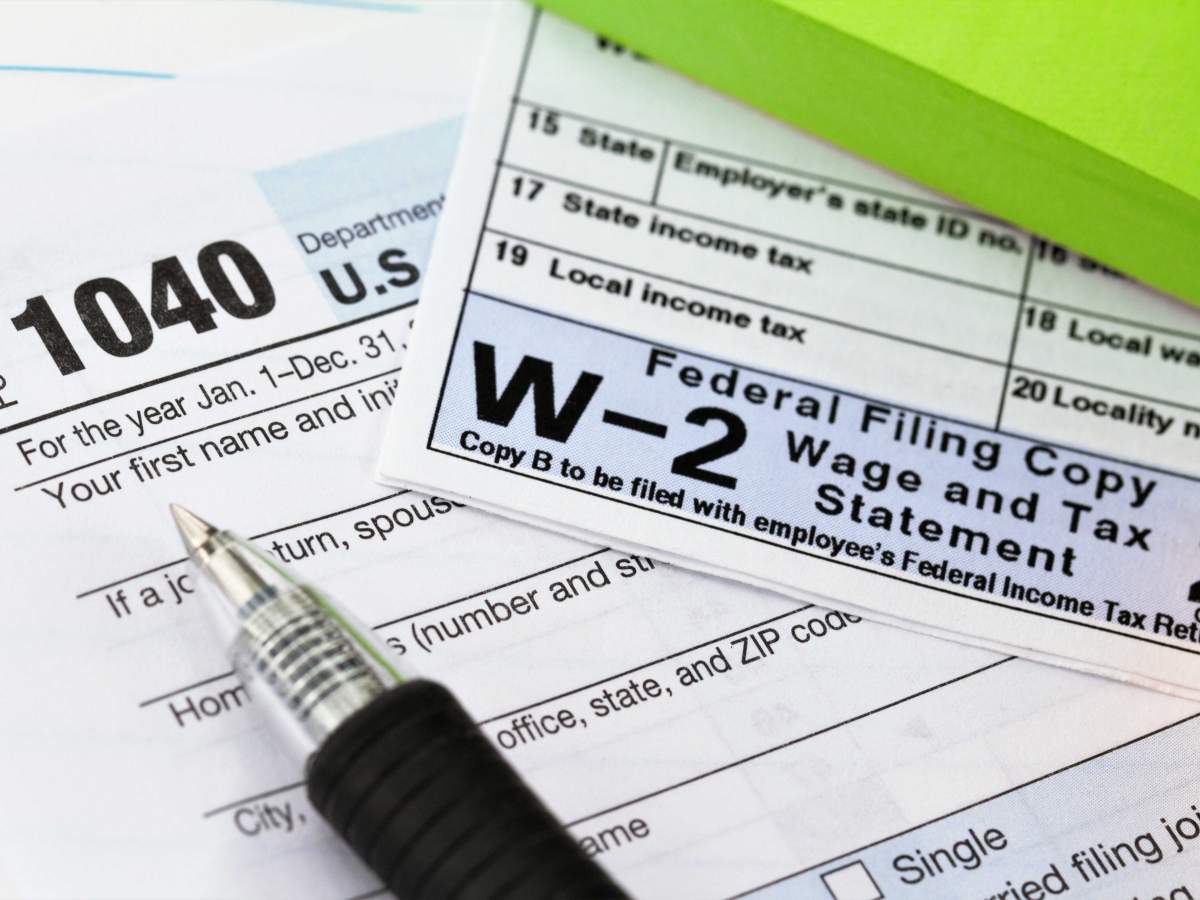
Update your mailing address with former employers if necessary. Employers may send W-2 forms after the job ends, and missing a form can delay filing.
If a W-2 is not received, first check payroll records and contact the employer. A last pay statement may help estimate wages, but it does not always contain every item needed for an accurate return.
What if you work two jobs at the same time?
Overlapping jobs can create a withholding shortfall because each employer may calculate withholding as though its payroll were the only wage source. This issue is also common when one spouse changes jobs while the other spouse continues working.
The multiple-jobs section of Form W-4 is designed to account for this situation. Another option may be requesting an additional fixed dollar amount withheld from each paycheck. The correct approach depends on total household income, pay frequency, filing status, and expected deductions or credits.
Review withholding several times during the year, especially after the first full paycheck from the new employer. A salary offer does not always equal taxable wages because retirement contributions, health insurance, flexible spending accounts, and other payroll elections affect the final numbers.
Are self-employment or contract payments different?
Some job changes involve contract work, freelance payments, or a temporary period between employers. Payments reported on an information return rather than a W-2 may not include income tax withholding.
If this income is substantial, set aside money for federal and New Mexico taxes and consider whether estimated payments are needed. Self-employment income may also be subject to self-employment tax, which is separate from regular income tax.
Keep invoices, payment records, business expenses, and mileage documentation throughout the year. Mixing employment wages with contract income without tracking the difference can make the tax return harder to prepare accurately.
A practical checklist for the year of the job change
Before filing, confirm that:
- Every W-2 and other income document has been received
- Wages from the former and new employers are included
- Federal and New Mexico withholding amounts match payroll records
- Retirement transfers were completed as direct rollovers when intended
- Bonuses, severance, and unused leave payments are included
- Any contract income and related expenses are documented
- Withholding is reviewed after major household or income changes
For residents managing a job transition, the most useful habit is maintaining records from the first day of the new position through the following tax filing season. The tax return is based on the entire year, not just the job held at the end of December.